
Verified Sunny Isles Beach Directory Holdings
No continuous Sunny Isles Beach city directory run has been verified. The useful shelf is regional: early Dade County and Miami editions, later telephone books, and a large obituary index. Sunny Isles was named in the 1920s but did not incorporate until 1997. Older resident research therefore belongs under Miami, Dade County, and nearby-town headings. The table limits itself to editions and serials confirmed by Miami-Dade Public Library System or HistoryMiami.
| Collection | Years | Where Held | Access |
|---|---|---|---|
| Dade County business guide | 1896-1897 | HistoryMiami; MDPLS reprint | Research-room original or cataloged reprint |
| Official Miami directories | 1904 and 1907 | HistoryMiami and MDPLS Florida Collection | Confirm issue access with staff |
| City of Miami Directory | 1924 and 1927 | MDPLS Helen Muir Florida Collection | Main Library research use |
| Southern Bell telephone directory | Serial, exact run unlisted | MDPLS Florida Collection vault | In-library, non-circulating |
| Miami-Dade Obituary Index | 1896-2008 | MDPLS online index | Free citations; articles vary by source |
The gaps matter. Public catalogs do not establish every issue, every publisher, or the last printed year. They also do not support calling this a single branded publisher run. Before a trip, ask the MDPLS genealogy desk to confirm the exact year. A failed catalog search does not prove that an edition never existed.
Sunny Isles Beach Under Dade
Pre-1997 searches require historical geography. Dade County began in 1836 with far larger borders, and its seat moved to Miami in 1844. The county became Miami-Dade in 1997, the same year Sunny Isles Beach incorporated. A nineteenth-century Dade entry can even concern land now in Broward or Palm Beach County.
The community itself developed in stages. Harvey Baker Graves named Sunny Isles after buying land in 1920. Haulover Bridge improved access, the fishing pier opened in 1936, Motel Row grew along Collins Avenue in the 1950s and 1960s, and major condominium communities followed. Those eras point to different sources. County plats and deeds suit the resort phase; directories, phone books, ads, and census pages suit the motel years; property and condominium records become stronger later.
Geography key. Treat 1997 as a custody break: older people and places usually appear in Dade County or Miami-area records.
Sunny Isles Beach Directory Origins
The earliest known Dade directory is the rare Business Directory, Guide and History of Dade County, Florida, issued by C.M. Gardner and C.F. Kennedy in 1896-1897. HistoryMiami reported that only three originals were known when it reviewed the volume. It covers the old, broad county and provides merchants, advertisements, local chronology, and settlement context. It is not an individual-resident roll.
That distinction prevents a common mistake. Absence from this guide says little about a household. Resident and business evidence is verified in the 1904 directory and later issues. The 1896 volume is still valuable for placing a trade, firm, or landmark near the start of Miami's growth after the railroad arrived.
View the MDPLS catalog record for the historic directory before seeking the reprint.
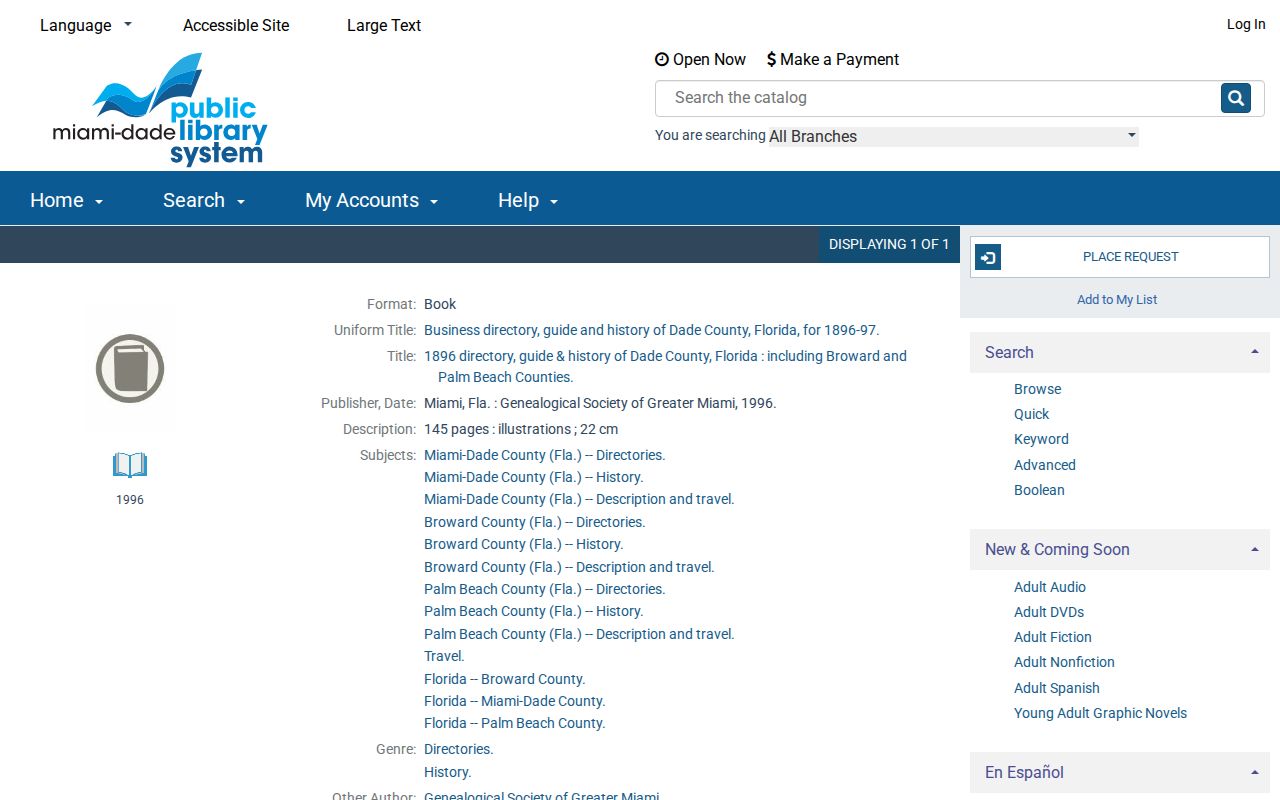
The catalog record identifies the edition and call number needed for a focused library request.
Sunny Isles Beach Directory Research
The specialized genealogy collection is at MDPLS Main Library, not the smaller Sunny Isles Beach Branch. It holds more than 27,000 publications and 35,000 microfilm or microfiche units. Most items do not circulate. Genealogy staff assist in person and by email, an important fallback because the website does not show a shelf-level list of every directory year.
The collection reaches beyond printed directories. Florida state censuses for 1885, 1935, and 1945, the 1890 veterans and widows schedule, passenger lists, draft registrations, and Miami airplane-arrival records can help bridge an address or name gap. Call 305-375-5572 or email genealogy@mdpls.org before traveling.
Explore the MDPLS Genealogy Digital Collection as a first check.
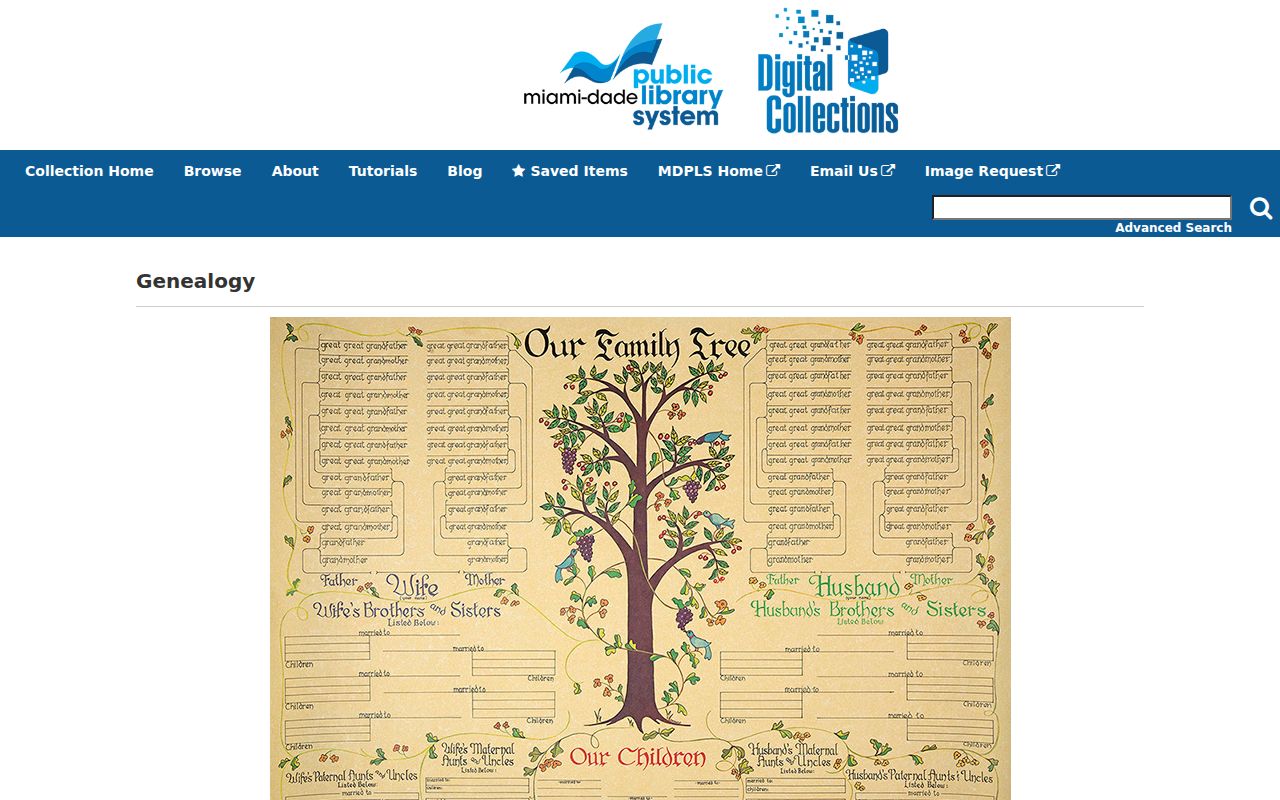
The digital catalog can identify available material, while staff remain the best source for a precise physical issue.
Read a Sunny Isles Beach Directory Entry
An early city directory entry can combine details that separate two people with the same name. HistoryMiami examples include a resident's name, spouse, work or trade, employer, home or business address, and civic or lodge ties. Record the whole line. A name and address alone may hide the best identifying clue.
| Personal name | Copy spelling, initials, and any spouse named in the entry. |
|---|---|
| Work detail | Note occupation, employer, business role, or classification. |
| Place | Separate home address from business location when both appear. |
| Affiliation | Record a company, club, lodge, or other organization exactly. |
| Edition context | Photograph the title page and that issue's abbreviation key. |
- Criss-cross directory
- An address-arranged section that lets a street and house number lead to a listed person or business.
- Householder index
- A name-based list of people associated with homes, arranged for finding the entry rather than proving ownership.
- Abbreviation key
- The edition-specific legend explaining shortened trades, address terms, and status marks. Do not assume symbols stayed the same.
No complete authoritative abbreviation key was found online for these editions. Interpret each mark from the physical volume's own legend, not from a key copied from another city's book.
Reverse Sunny Isles Beach Directory Searches
HistoryMiami confirms that Miami directories included address-arranged sections. That creates a historical reverse search: find the street, locate the house number, copy the named occupant or business, and compare nearby addresses. Repeat the same process in the next available edition. A first appearance or disappearance is a date clue, not proof of a move or death.
Old street forms demand care. HistoryMiami research traces Avenue D to Miami Avenue, 12th Street to Flagler Street, and Avenue G to NW Second Avenue. Those are central-Miami examples of the method, not proof that Sunny Isles streets were renumbered. Use successive maps and directory entries to test an old address rather than forcing a modern label onto it.
Sunny Isles Beach Records Beyond Directories
MDPLS Digital Collections adds aerial surveys, atlases, plat books, blueprints, photographs, surname files, trees, and local scrapbooks. These records can explain why an address changes or why a person appears under a business name. The library announced digitized surname files in 2024 and newer finding aids for major special collections in 2025.
Open the MDPLS Digital Collections search and try a street, family name, motel name, or subdivision.
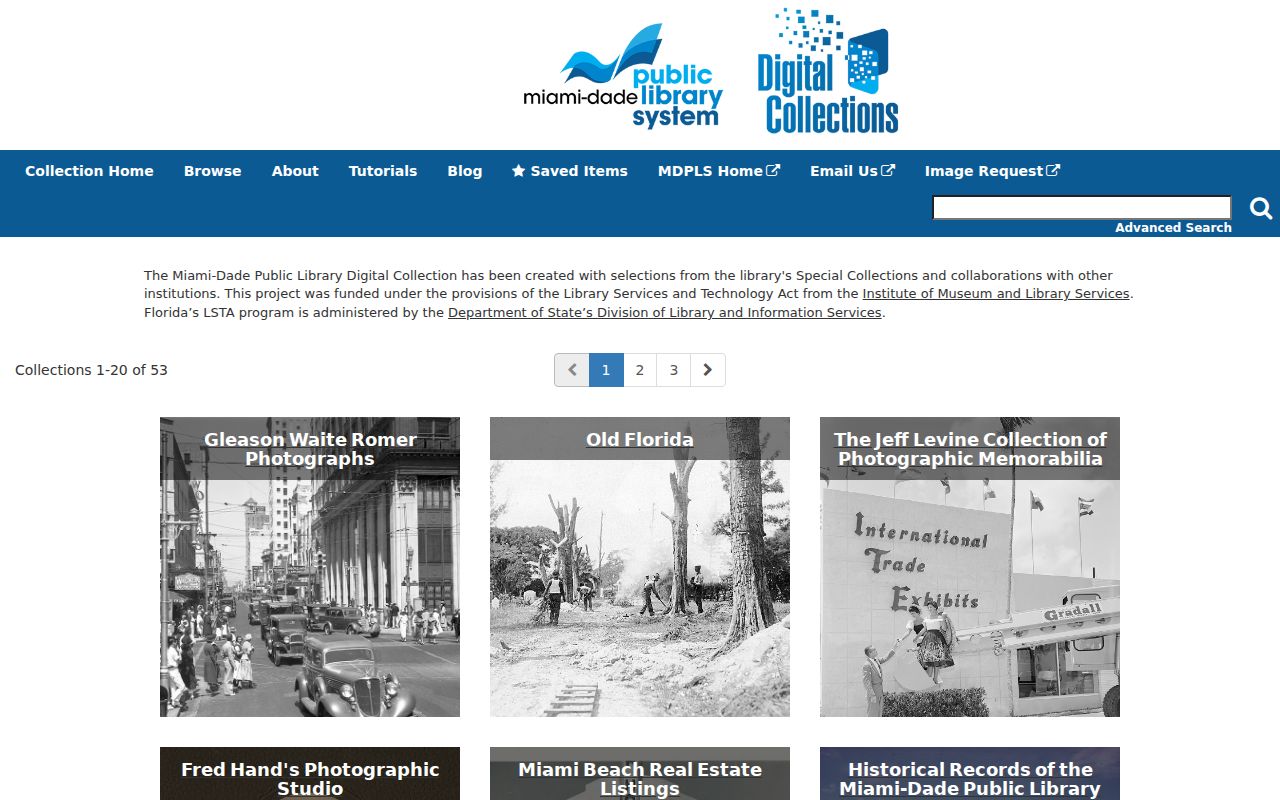
The broad search brings maps and community-memory files into the same investigation as a city directory entry.
The Library of Congress has public-domain Miami Sanborn maps, including a verified 1924 set. No inspected catalog proves that those sheets cover present Sunny Isles Beach. Check each sheet index before using a map as local evidence.
Sunny Isles Beach Directory Archive
HistoryMiami's Research Center is the other key shelf. Its non-circulating library holds city directories, yearbooks, scarce newspapers, brochures, books, and ephemera. Family papers, group records, architectural drawings, and about 1.5 million images can place a person or building in a wider South Florida story.
The reading room lists Tuesday through Thursday, noon to 4:30 p.m., and Friday, 10 a.m. to 4:30 p.m. Confirm current access with staff at 305-375-1623 or archives@historymiami.org. Names, dates, edition titles, and call numbers make a request far more useful than a broad question.
Review the HistoryMiami Research Center holdings before contacting the archive.
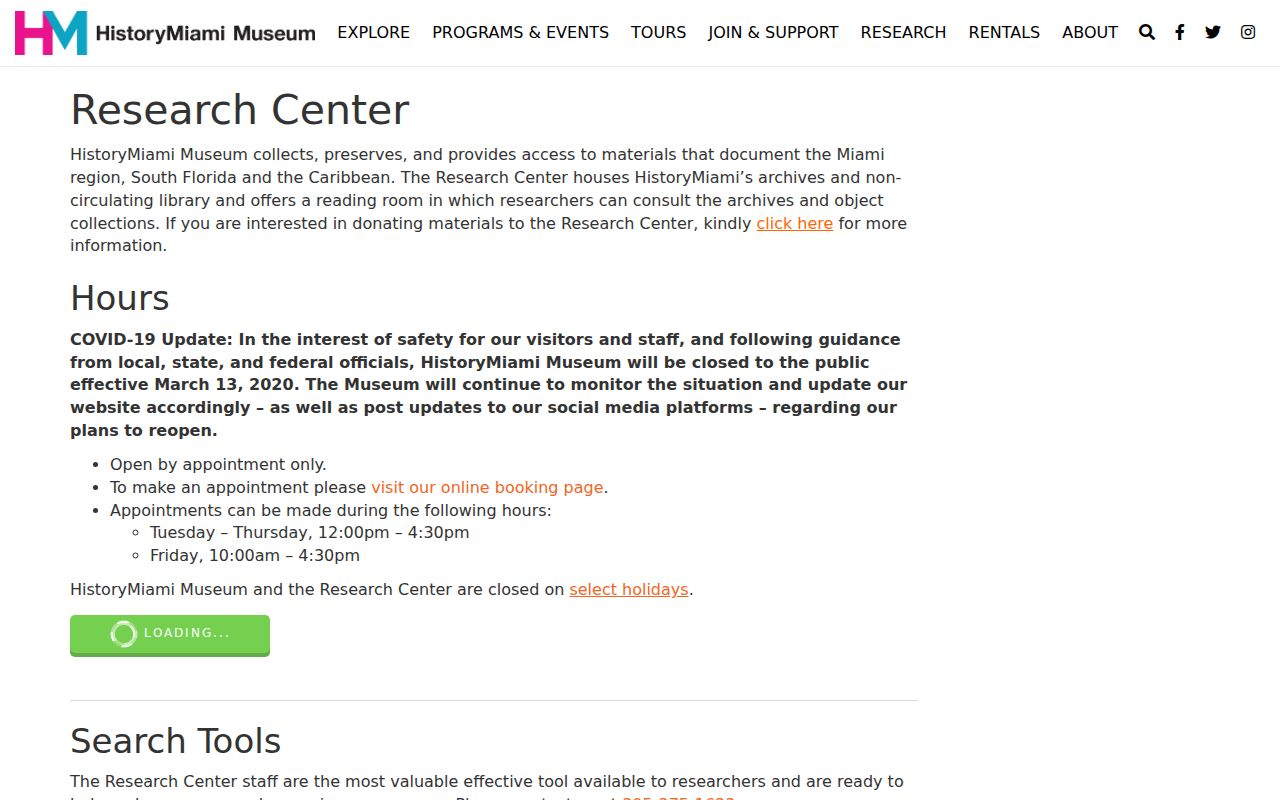
The collection overview shows why newspapers, images, and maps can resolve gaps left by printed listings.
Sunny Isles Beach Special Collections
Main Library's Helen Muir Florida Collection and Special Collections provide the physical setting for scarce local material. Many genealogy items are in-library only, and some digital databases require a library card or branch access. The Sunny Isles Beach Branch can help with database access and referrals, but the main genealogy shelf remains downtown.
Use the MDPLS Special Collections overview to check rules and contact paths.
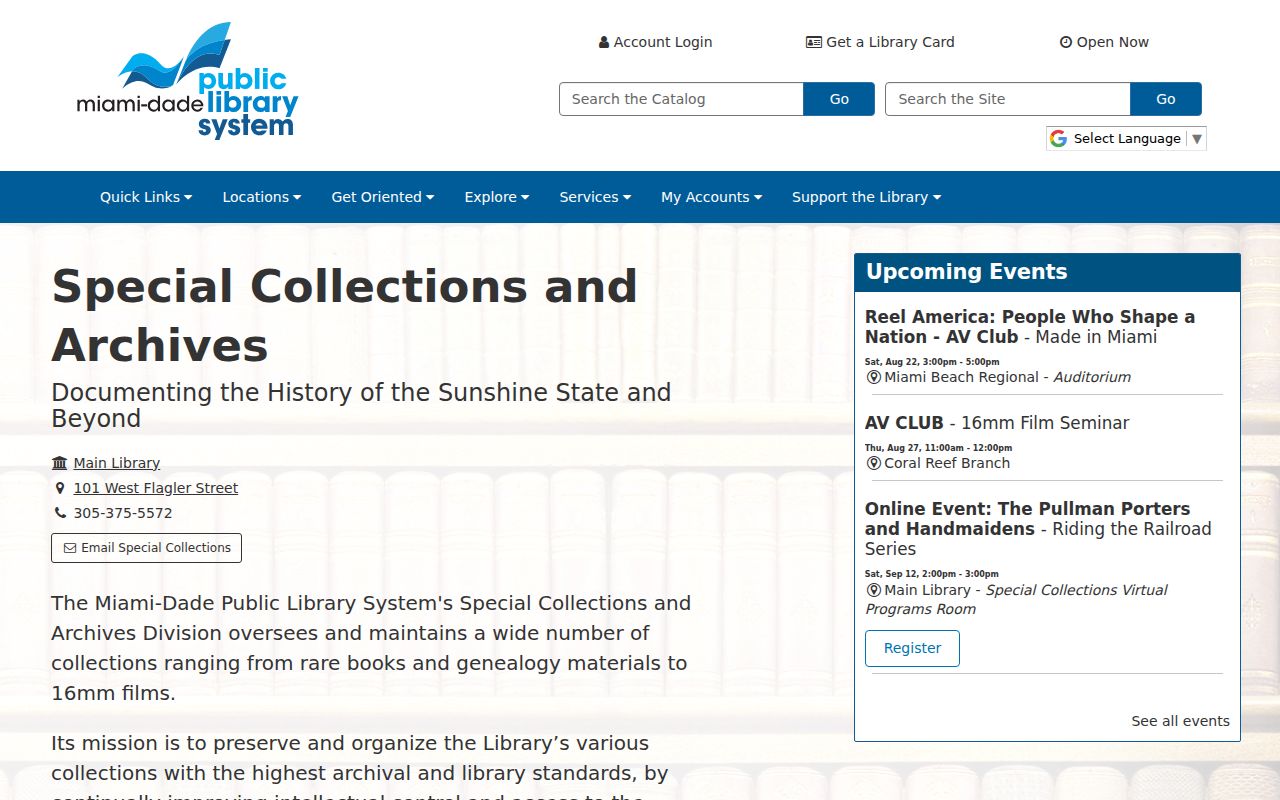
The overview helps distinguish online discovery from materials that must be read in the library.
Trace Family Through Sunny Isles Beach Directories
City directories can date changes between federal census years. Begin with the newest available edition before the event you are studying, then move backward. Copy spouse, work, employer, and address details each time. Pair the result with the newest open federal census, currently 1950, and browse by enumeration district when name indexing fails.
- Find the person in the latest useful city directory edition and transcribe the full entry.
- Move back one available edition at a time, noting spelling, work, spouse, and address changes.
- Check the address-arranged section for the same site and nearby listed people.
- Compare the directory with the 1950, 1940, 1930, or earlier open census schedule.
- Use deeds to test ownership, then probate and the obituary index when a person disappears.
The Miami-Dade Obituary Index contains more than 915,000 names and citations from 1896 through 2008. It searches first, middle, and last name plus publication dates. Results may show age, source, date, and birth state. Some articles are available through library databases; others require Main Library microfilm. A disappearance from a city directory may mean a move, death, missed edition, or unlisted status, so close the trail with evidence rather than assumption.